
.png)
In moments of illness or uncertainty, people aren’t methodical—they’re overwhelmed and stressed. Most digital health tools worsen this by presenting dense symptom lists, clinical jargon, and rigid diagnosis logic that make users feel confused rather than supported.
Diagnosa was designed to intervene not by diagnosing, but by guiding users toward informed decisions at the exact moment they feel unsure.
-p-800.png)
Early research revealed that the challenge wasn’t lack of information—it was too much of it at the wrong time. Users didn’t want a definitive diagnosis; they wanted clarity about next steps.
Presenting medical conditions without context only increased anxiety, leading to hesitation or abandonment.
This insight reframed Diagnosa from a diagnostic tool into a decision‑support experience focused on reducing uncertainty.
Diagnosa was intentionally scoped based on real constraints:
These constraints weren’t limitations—they defined success.
User patterns showed:
We deliberately reduced medical depth and structured the flow to prioritize clarity and emotion regulation.
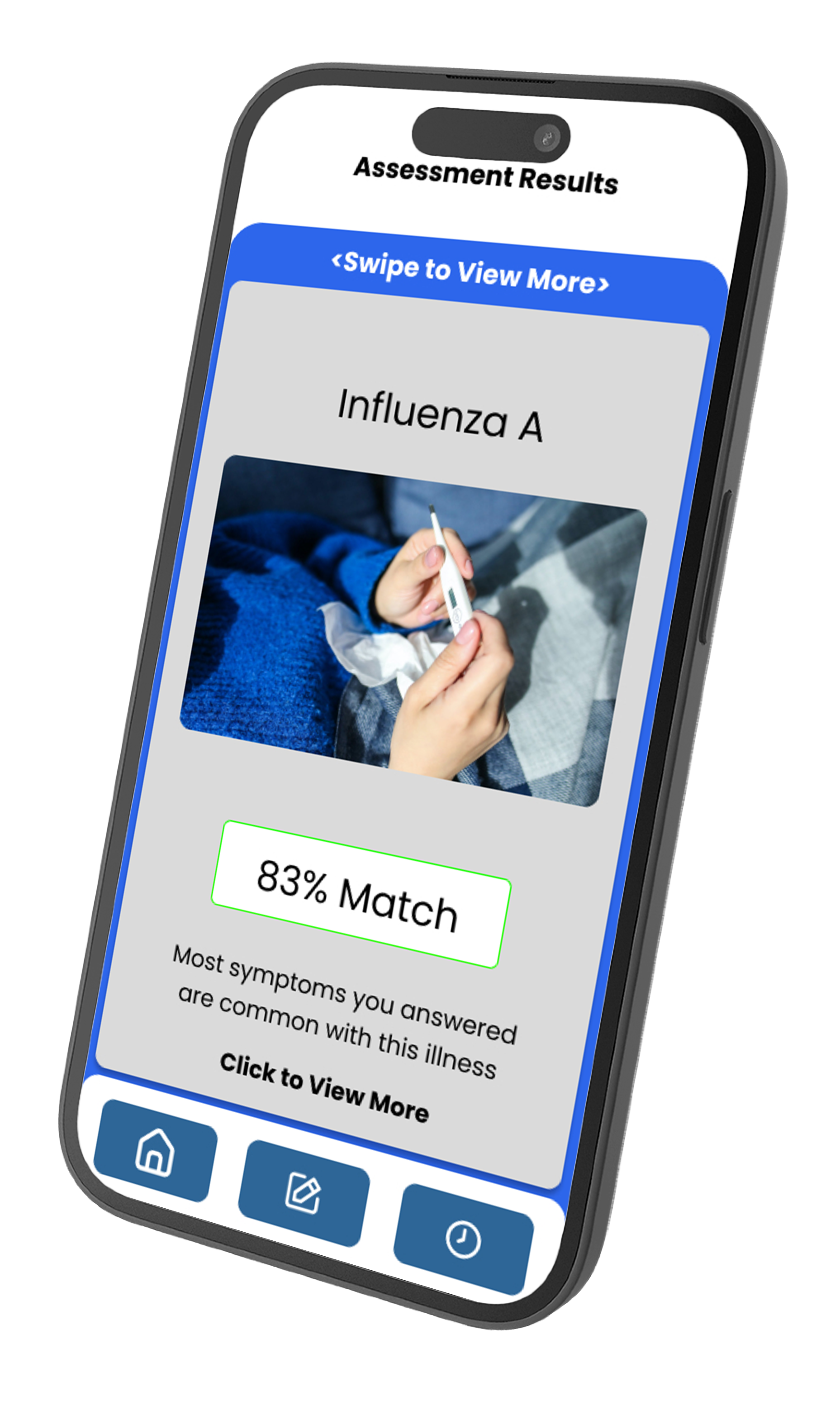
Instead of presenting exhaustive conditions or complex probabilities, Diagnosa leads users through a focused self‑assessment, offering card‑based match percentages with plain‑language explanations.
This trade‑off—focus over completeness—was central to the product.
Several common features were discussed but deliberately excluded because they increased uncertainty or cognitive load:
Diagnosa doesn’t tell users what they have.
It helps users answer what they should do next.
The experience was built around three principles:
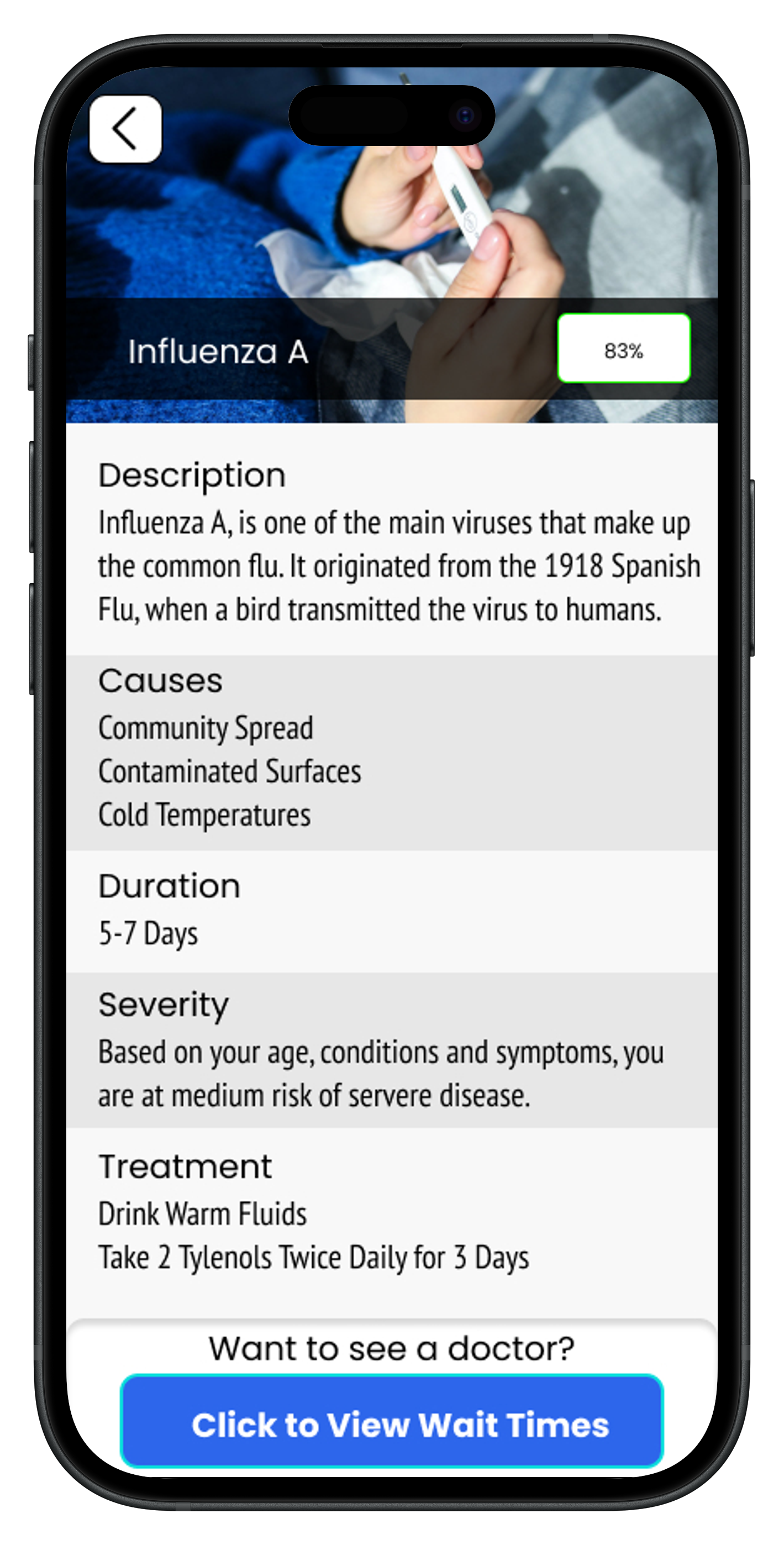
After the assessment, users see card‑based match percentages showing the likelihood of possible conditions. Each card includes a plain‑language summary, reassurance, and guidance toward next steps.
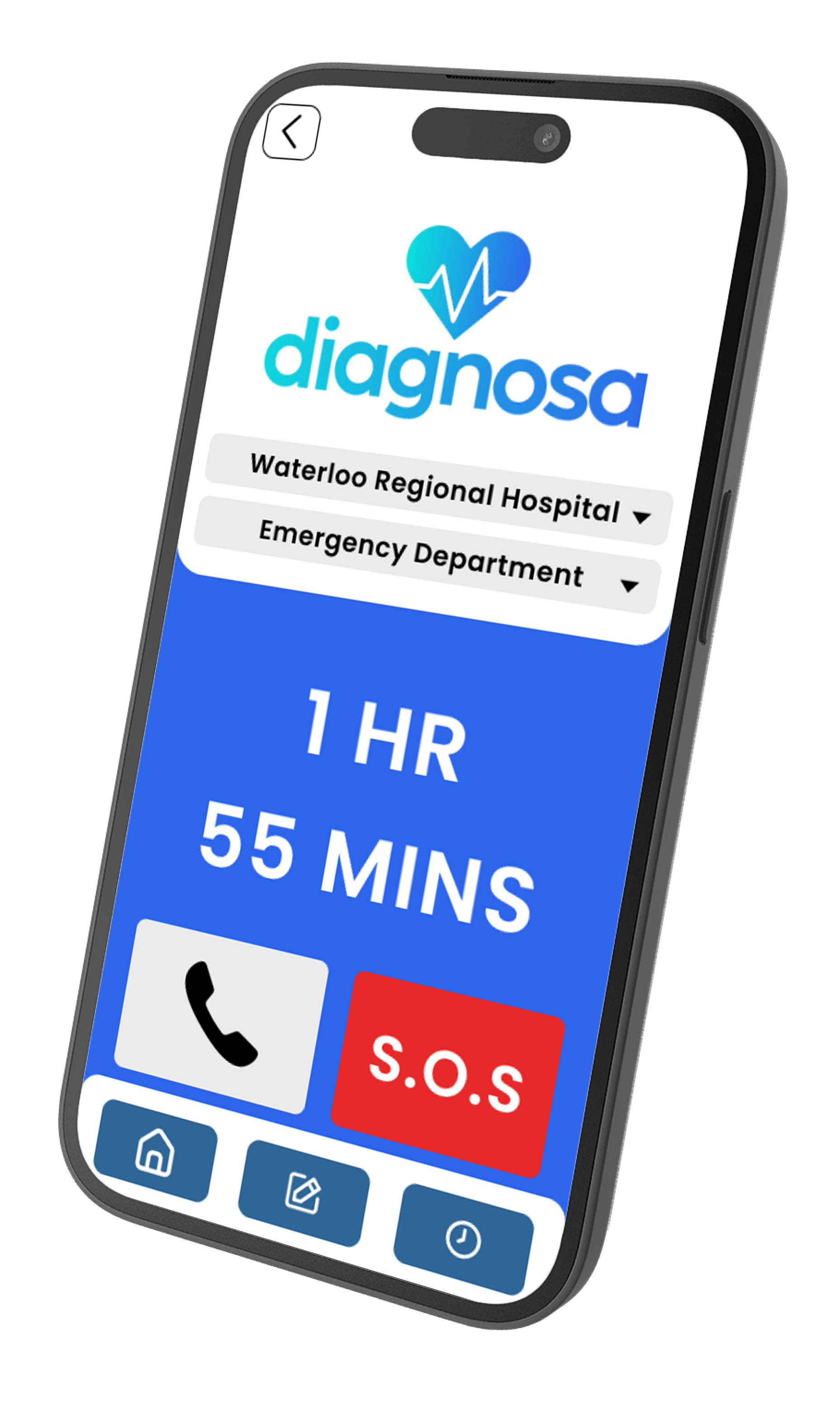
Hospital wait times were integrated as a secondary decision‑support feature, not the core experience.
They provide:
Including wait times after the assessment—rather than upfront—reduced confusion and kept the focus on user understanding first.
Diagnosa demonstrated that:
Users consistently reported:
“This helped me decide what to do next”
“I felt less anxious than using Google”
“I understood urgency more clearly”
Designing for healthcare means designing for emotion first, logic second.
True clarity isn’t about volume of information—it’s about timing and presentation.