
.png)
For first-time wheelchair users, the ordering process is overwhelming. What should be an empowering step toward mobility is often buried under long forms, unfamiliar measurements, and irreversible configuration decisions.
ForWheelz was created to transform wheelchair ordering from a dealer-centric, error-prone process into a guided, confidence-building experience for users, caretakers, and dealers alike.
Research revealed that wheelchair ordering breaks down because users are asked to make high-stakes decisions without understanding the consequences.
Key challenges included:
For first-time buyers especially, anxiety came from not knowing whether their choices were correct.
ForWheelz was designed for multiple stakeholders, each with different pressures:
A representative persona:
Simon, 24, ordering his first custom wheelchair. He wants independence and reassurance—but not to feel overwhelmed or judged.
This emotional context shaped every design decision.
Rather than digitizing existing forms, ForWheelz reframes the process as a guided configuration journey.
The product shifts focus from:
Visualization and guidance replace guesswork.
The team aligned around four goals:
Every feature had to serve at least one of these goals.
The core experience centers on real-time 360° visualization.
Users can:
This removed abstract decision-making and replaced it with visual certainty.
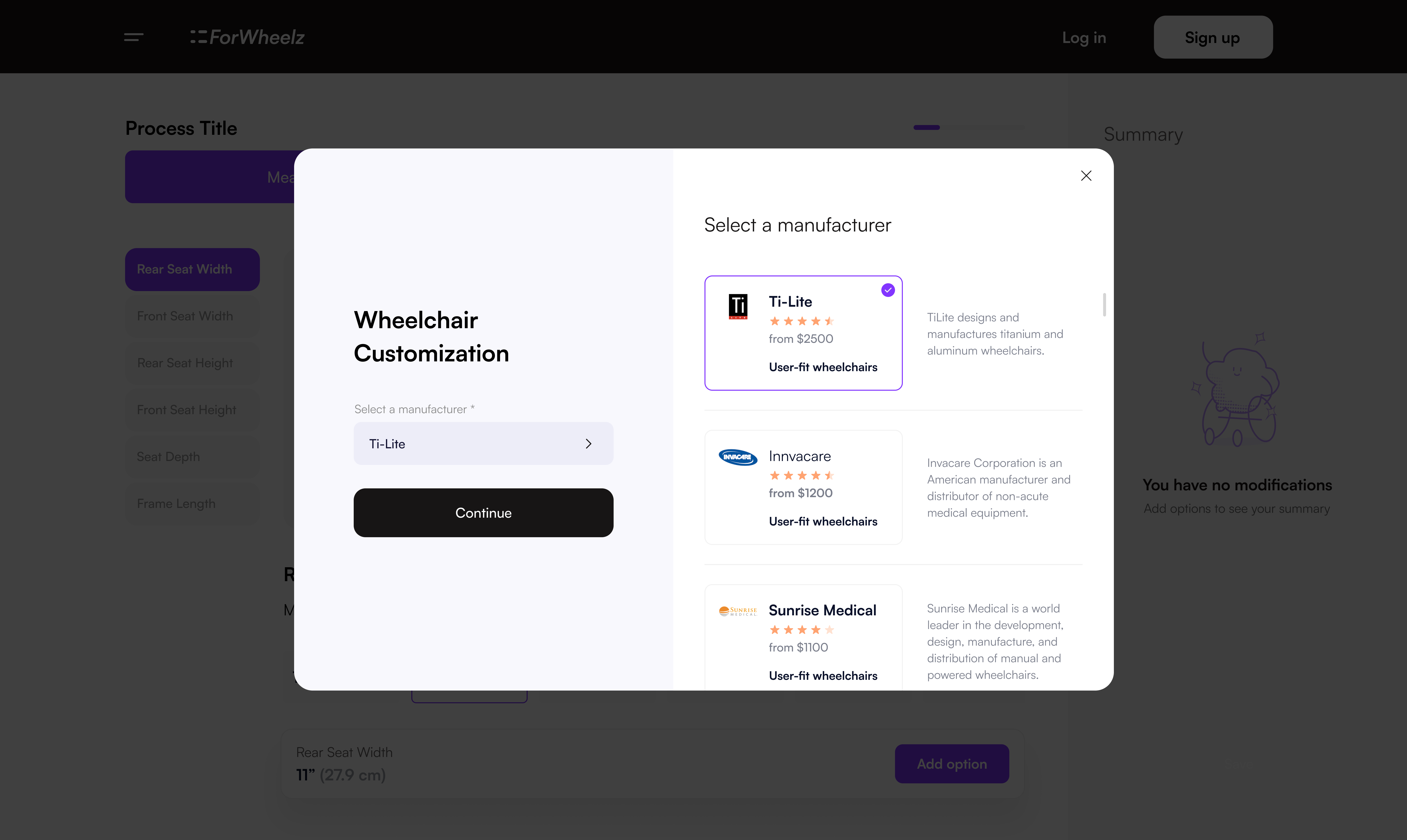
Instead of exposing all options at once, ForWheelz uses a step-by-step flow with:
Users always know:
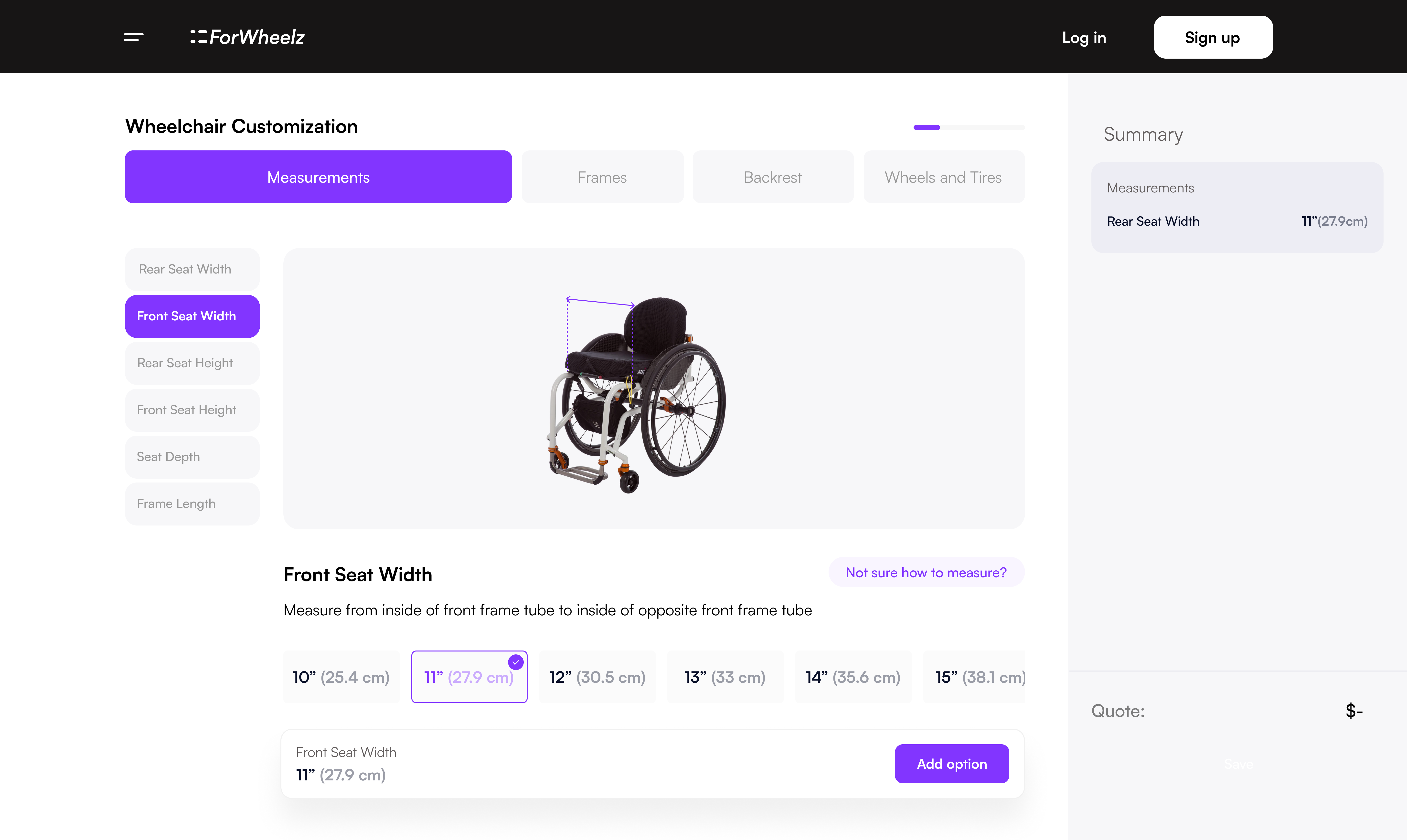
Measurement errors were a major pain point.
To address this, ForWheelz includes:
This reduced ambiguity and increased confidence for users and caretakers.
Dealer needs were integrated without overpowering the user experience:
A subscription model supports recurring revenue while keeping the platform accessible.
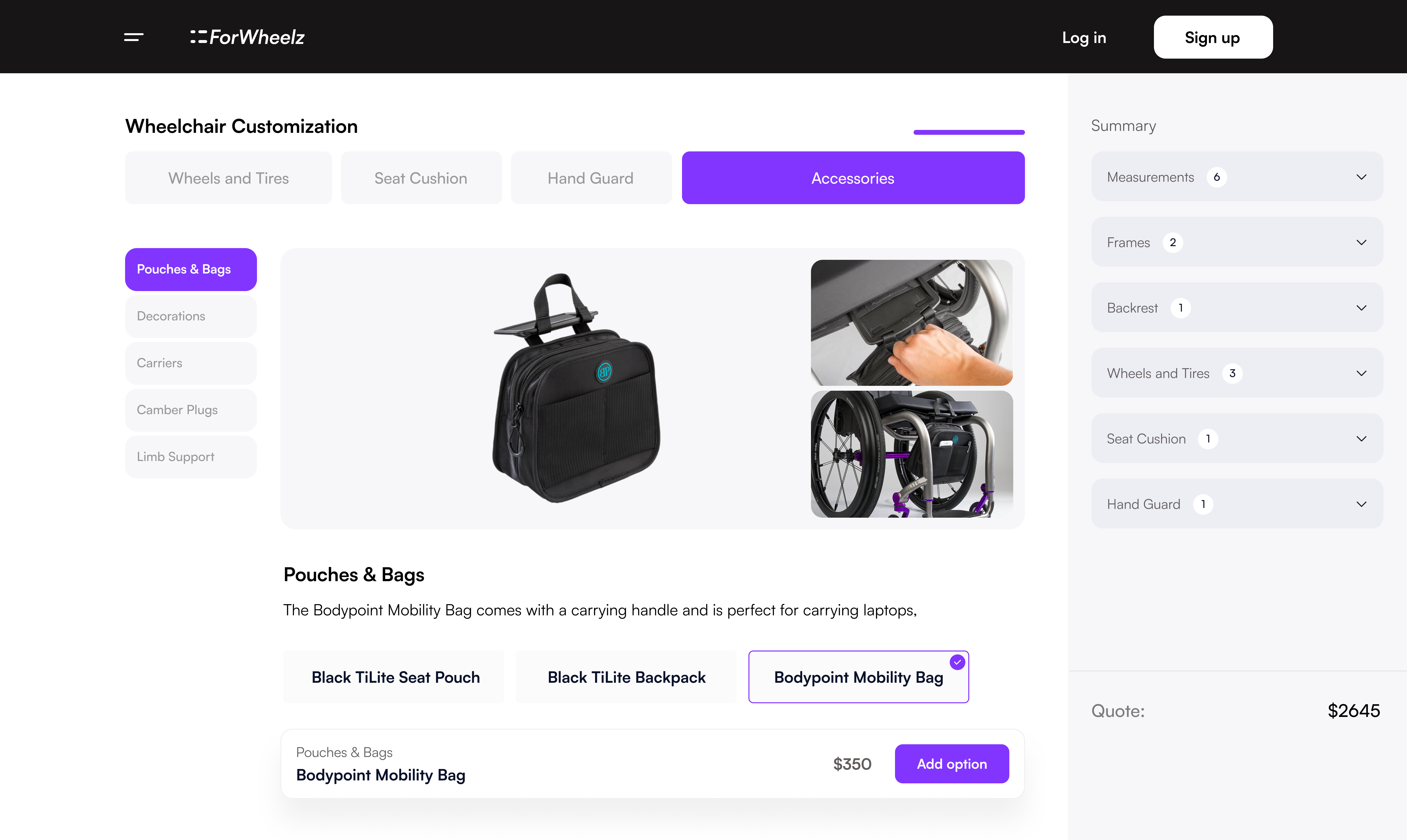
Select budget/manufacturer → Choose pre-built or custom → Input measurements → Customize visually → Preview → Save & submit → Dealer finalizes
Supporting flows handle:
The core journey remains uninterrupted.
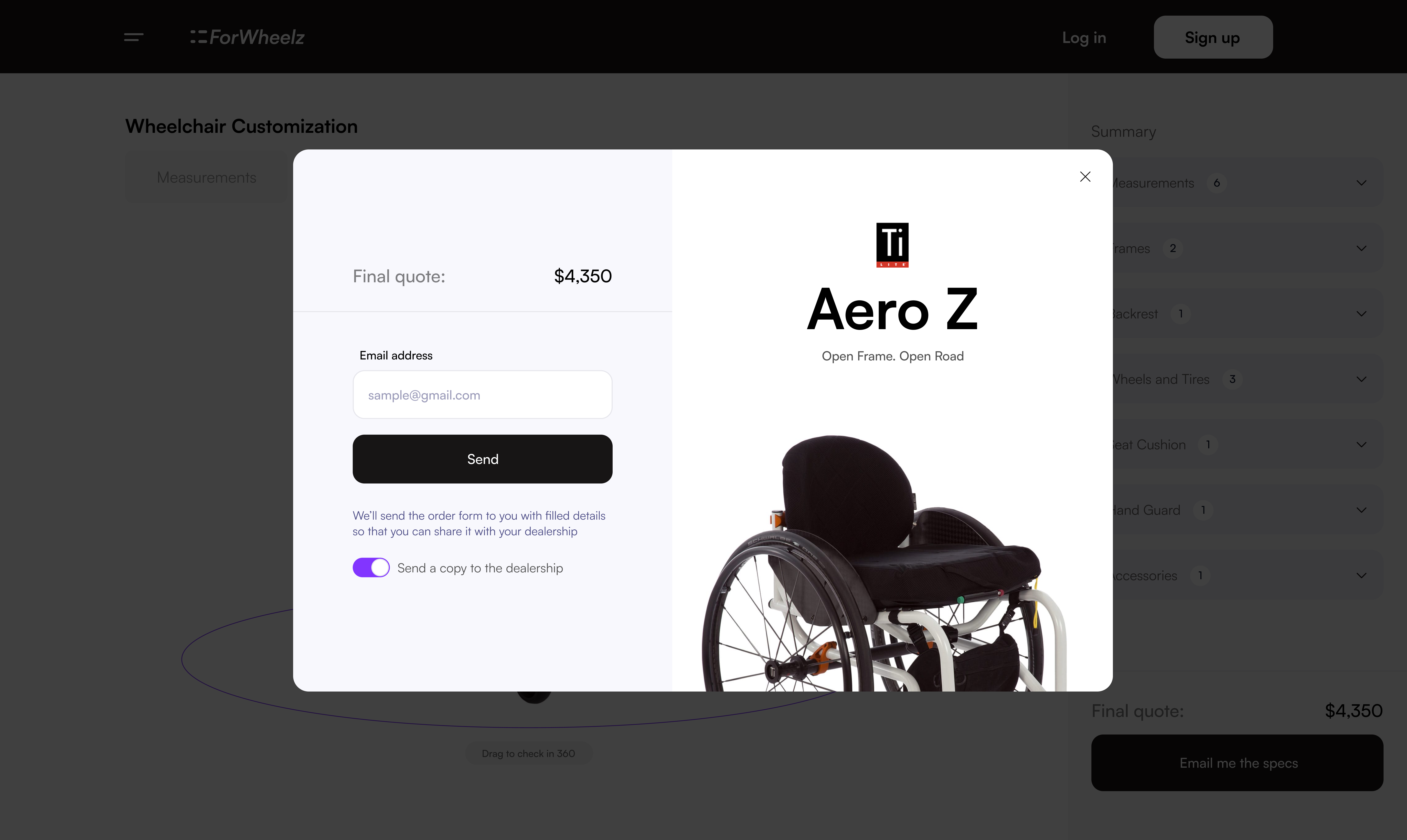
Users reported:
Dealers benefited from:
In assistive technology, clarity is dignity.
Designing for autonomy and understanding is as important as physical functionality.